

A practical hotel room check-in checklist gives you a calm way to get oriented before unpacking. You do not need to inspect a room like a building professional. Focus on the things you can observe, the features you rely on, and the information you would need if something went wrong.
Give yourself a few minutes while your luggage is still together. If you notice an immediate danger, move away and seek appropriate help instead of continuing the checklist. Ordinary comfort issues can be discussed with reception after you have settled the essentials.
Confirm the booking at reception
Check the room type, number of beds, length of stay, and any features confirmed in advance. Ask about reception hours and the best way to reach staff overnight. Clarify parking access, breakfast arrangements, and any temporary payment hold while the details are easy to resolve.
Note the property’s address and local emergency number somewhere you can reach without searching online. If you arrive when reception is closed, confirm how to get help with a failed key or an unusable room. An automated entry message may explain access without explaining who can respond to a problem.
Make essential needs clear early
If you reserved a particular bathroom feature, connecting rooms, or a crib, verify that it is available now. A note on a reservation does not tell you what has actually been placed in the room. Keep the written confirmation accessible so you can describe a mismatch precisely.
Use a specific question
Instead of asking whether the room is suitable, ask whether it has the feature you need: “Does the assigned bathroom have the roll-in shower confirmed in my booking?” Our accessible room questions can help you prepare that conversation.
Check the door and learn the way out
Make sure your key opens the assigned room and that the door closes and latches normally. Check the provided lock and privacy features without taking anything apart. If the latch does not engage, or the door will not close properly, report it promptly rather than treating it as a minor inconvenience.
Learn the exits before unpacking
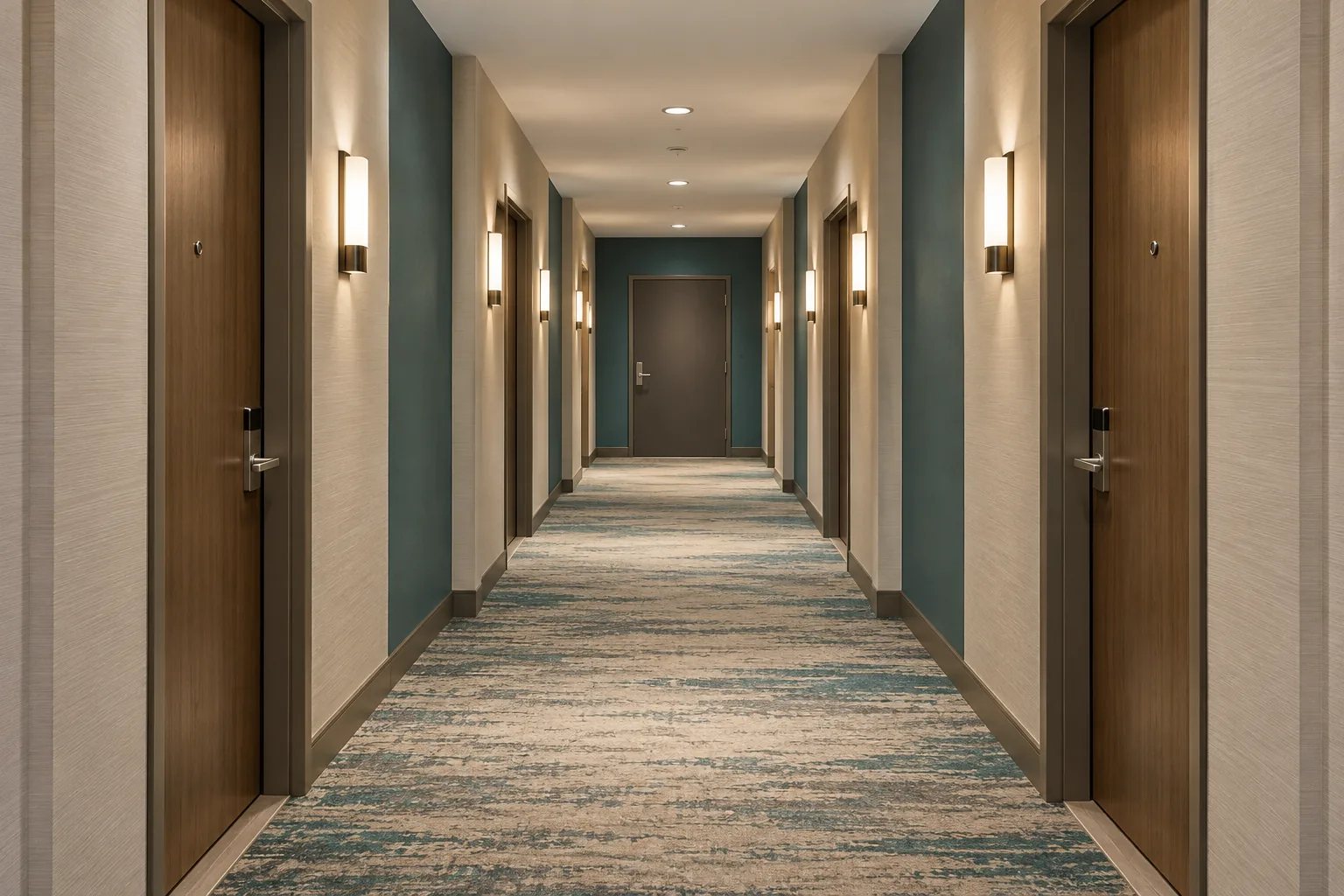
Read the evacuation information. The U.S. Fire Administration recommends finding the two nearest exits, counting the doors between your room and those exits, and locating the fire alarms. Do this while the corridor is clear and you are unhurried.
Keep the route through your room clear of suitcases and shoes. Do not wedge open a fire door or improvise a barrier that could delay leaving. Our hotel fire safety guide explains how to make an arrival plan with your companions.
Take a brief look before unpacking
Look for obvious damage, wet flooring, broken furniture, exposed wiring, or a strong unexplained odor. Use the room’s normal lighting and switches; leave repairs to staff. Photograph a relevant condition if it is safe and useful, without including other guests or private information.
For bed bugs, the EPA’s travel advice recommends inspecting the room and keeping luggage on a suitable rack away from the bed. Look at accessible mattress seams, the headboard area, and the rack. Do not move heavy furniture or use pesticides yourself.
A brief look cannot rule out an infestation. If you see something concerning, keep your belongings together and ask staff to investigate before spreading clothes around. Our guide to checking for bed bugs at a hotel explains the limits of a visual check and how to describe possible signs.
Try the features you need to use
Check that the bathroom layout, bed access, and route through the room work for you. Confirm that required equipment is present and that you understand how to use it. Avoid relying on an item that appears damaged or unstable; ask staff for assistance or an alternative.
Communication matters too. At covered U.S. businesses, ADA effective communication requirements depend on the situation and the person’s needs. Tell staff which communication method works for you, and ask about accessible alerts or information you need during the stay.
For an infant, check the sleep space before bedtime. CPSC safe sleep guidance advises placing babies on their backs in an appropriate sleep product with a fitted sheet and no soft bedding. If a supplied crib looks damaged or incomplete, request a suitable replacement; do not improvise a mattress or sleeping arrangement.
Set up the room for an uncomplicated stay
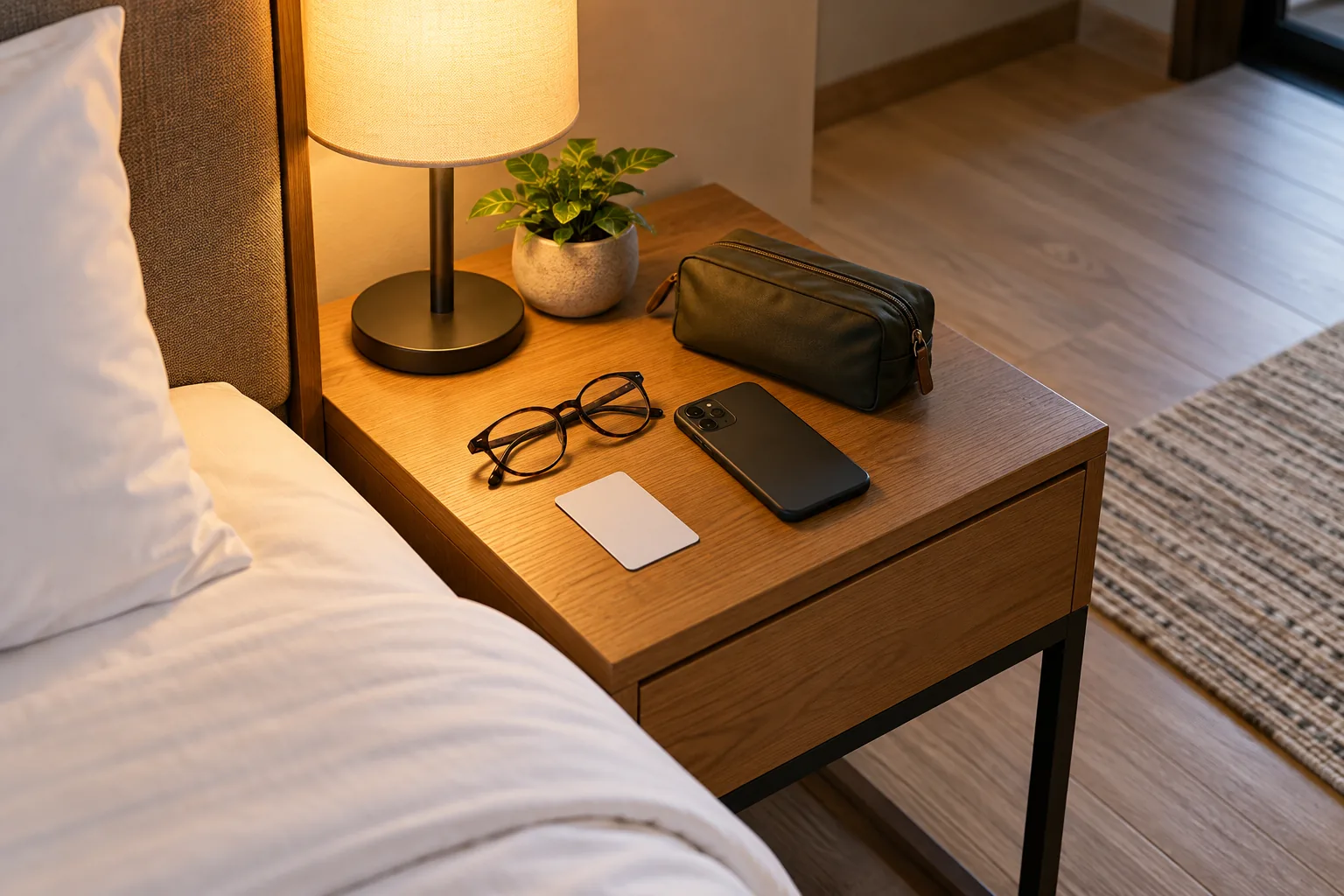
Choose a consistent place for your room key, glasses, and phone. Keep frequently needed items reachable without blocking the door. Keep medicines accessible to the adult who needs them, but follow the CPSC guidance on locked, out-of-reach storage and original child-resistant containers when children are present. If you use a room safe, read the instructions and confirm how it operates before placing anything inside; do not assume a safe removes every risk of loss.
Use intact chargers and avoid damaged sockets or cords. The U.S. Fire Administration’s electrical safety advice includes avoiding overloaded outlets and damaged cords. These basic precautions also make sense when using your own devices while traveling. Report a suspect outlet instead of testing it repeatedly.
Ask reception for the correct Wi-Fi network name and connection process. A familiar-looking network name alone does not establish that you have selected the hotel’s network. See our guide to hotel Wi-Fi and your accounts before entering sensitive information or responding to an unexpected login prompt.
For shared rooms, explain where the key and essential items will be kept and which adult is helping each child. If someone leaves separately, agree how to reconnect without announcing the room number publicly. The arrangement can be simple; the useful part is making sure everyone understands it.
Raise a problem while the details are fresh
Tell staff what you observed, where it is, and what you need next. “The entry door does not latch when closed; please arrange another room or an immediate assessment” is easier to act on than a general complaint about safety. Ask who will respond and when.
If a feature you depend on is missing, or the problem cannot be addressed promptly, discuss another room before unpacking fully. Read when to ask for a different hotel room for practical ways to evaluate that choice.
After a room move, repeat the checks that depend on location. Test the new key and door, confirm essential features, and learn the exits from the new floor or wing. Do not assume the second room has the same bathroom layout, connecting door, or route to reception as the first.
Finish with a quick mental review: the booking matches, the door works, you know the exits, essential features are usable, and belongings are organized. Then put the checklist away. Its purpose is to support your stay, with a clear route back to staff if something changes.