

Hotel fire safety starts with understanding an unfamiliar building before you need to leave it. A few minutes at arrival can help you recognize the exits, organize essential belongings, and discuss any assistance your group needs. The room you used on a previous trip may have a different layout from this one.
If a fire or emergency is happening now, follow the building’s emergency instructions and emergency responders; do not delay action to read this guide. The steps below are for preparation, with basic response principles from official fire safety sources.
Ask about fire protection before booking
The U.S. Fire Administration recommends choosing a hotel with hardwired smoke alarms and an automatic sprinkler system. Ask the property about these features before booking, especially if a listing does not explain them. A decorative room photograph is not a reliable way to identify the building’s protection systems.
The agency also maintains the Hotel-Motel National Master List for properties meeting the listed federal fire safety criteria. The list concerns specified fire protection features; it is not a guarantee of every aspect of a hotel’s condition or an overall safety rating.
Include fire preparation among your before-booking questions. If someone in your group needs assistance using stairs or receiving alarms, discuss that with the property while you still have time to assess the arrangements.
Read the plan and find two exits
On arrival, read the evacuation information for your floor. If it is missing or unclear, ask staff to explain it. Locate the two nearest exits, count the doors between your room and each exit, and notice where the fire alarms are. The USFA’s printable hotel reminder lists these arrival steps.
Look beyond the route to reception
The route you used to reach your room may not be the most useful evacuation route. Identify the marked stairs and learn where the posted plan directs you. If a corridor or exit appears obstructed, report it to staff promptly; do not assume someone else has noticed.
Do the orientation without opening restricted doors or setting off alarms. Ask staff if a sign or route is unclear. Tell companions which direction each exit lies from the room, rather than relying on everyone to remember a diagram they glanced at separately.
Check the route again after a room move
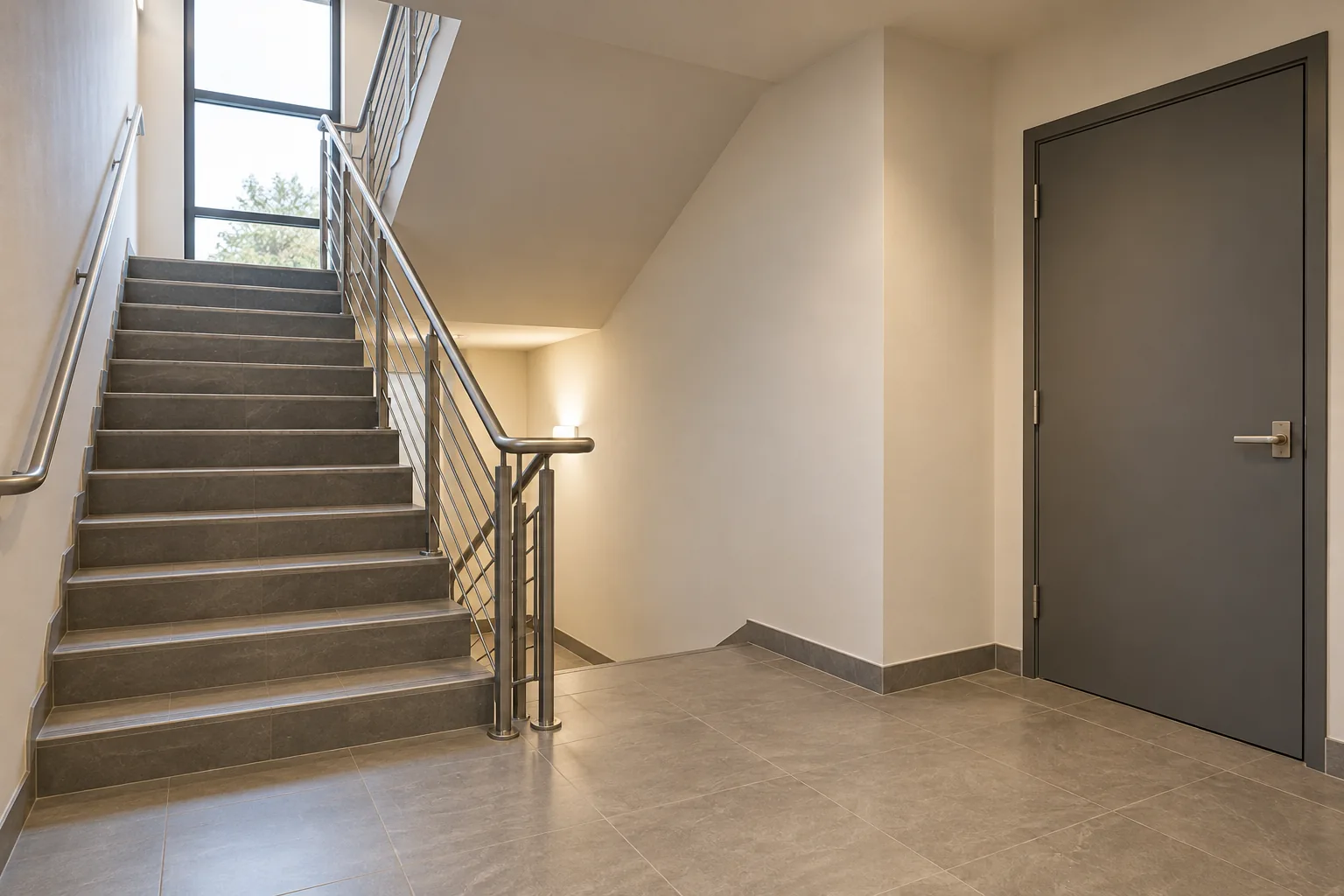
A different floor or wing means a different plan. Repeat the orientation after changing rooms. Our hotel room check-in checklist includes this step so it does not get lost among keys, luggage, and arrival arrangements.
Agree on a plan with your travel companions
Explain the exits in a way everyone can understand. With children, keep the conversation brief and practical: follow the responsible adult, leave belongings, and stay together at the designated assembly area. Agree which adult helps each child so responsibilities are clear before an alarm sounds.
Ask staff where guests should assemble and how to report someone who may still be inside. If your group is separated, give responders the missing person’s last known location rather than returning to search. Keep room and floor details available so you can explain where assistance is needed.
Our hotel safety planning guide for families can help you fit this conversation into a wider arrival routine. A short explanation followed by looking at the route is easier to remember than a long lecture at bedtime.
Discuss accessible alerts and evacuation assistance
Tell staff about the practical arrangements you need, such as visual alerts, an accessible explanation of the route, or an evacuation assistance plan. Ask how those arrangements operate overnight and who is responsible. Do not assume that help will appear automatically because the reservation mentions an accessible room.
The USFA’s disability fire planning guidance highlights accessible alarms and planning around individual abilities. That resource focuses on homes, so discuss the hotel’s actual building and procedures with its staff. Do not substitute a generic plan for arrangements you need to understand at that property.
If the answers are unclear, resolve them before settling in. Our accessible hotel room questions include communication and emergency planning alongside bedroom and bathroom features.
Keep the room ready for a straightforward exit
Place luggage where it does not block the route to the door. Keep your room key, phone, glasses, and necessary mobility aids in consistent, reachable locations. A small flashlight can be useful when traveling. Planning where essentials belong should never become a reason to delay escape to collect them.
Keep equipment and routes clear

Use undamaged chargers and avoid overloading outlets. The USFA’s electrical fire prevention advice covers damaged cords, overloaded outlets, and keeping combustible items away from lamps. These everyday precautions also apply when using your own devices while away.
Do not cover, disable, or experiment with smoke alarms or sprinklers. Report damaged equipment to staff. Keep fire doors closed as intended and avoid placing luggage in corridors. Ask staff to address a problem rather than trying to repair the building’s safety equipment yourself.
Before sleeping, check that the way to the door is still clear after unpacking. Notice whether a charging cable crosses that route or a bag has been left against the door. Small changes during the evening can undo an otherwise sensible arrival setup.
Respond to an alarm without investigating the fire
Take an alarm seriously and follow the building’s emergency plan and responders’ directions. If fire is in your room, leave promptly and close the door behind you. Raise the alarm and contact emergency services from a safe location. Do not stop to photograph the fire or attempt an unfamiliar firefighting task.
The Marshalltown Fire Department’s hotel guidance advises using stairs rather than elevators and leaving only when it is safe to do so. Do not use an ordinary passenger elevator during a fire. Take your room key if immediately available, without delaying your departure.
Do not open a door that feels hot. If you can check a cool door safely, open it cautiously and be ready to close it. Do not enter a corridor filled with smoke or flames. If you encounter smoke while escaping, stay low and use a clear alternative route if available.
Know what to do if your route is blocked
If you cannot leave safely, keep the door closed and call the local emergency number. Give the hotel’s address, your floor, room number, and any assistance needed. The USFA’s hotel emergency advice includes calling the fire department with your location when a hot door prevents leaving. Follow the dispatcher’s instructions.
Once outside, stay at the designated assembly area and tell responders about anyone missing. Do not re-enter until authorities say it is safe. Questions about belongings, replacement rooms, and booking arrangements can wait until the immediate emergency has been addressed.