

The most useful questions to ask about an accessible hotel room start with how you use a space. A label such as “accessible” cannot tell you whether the bed height, shower arrangement, alert system, or route from the entrance will work for you. Specific answers help you decide before committing to a rate.
Make a short list of features you need and ask about the actual room category you intend to reserve. This guide is a planning aid; its references to the Americans with Disabilities Act apply to covered U.S. lodging, not every property worldwide.
Describe the features you need to confirm
You do not need to share an extensive medical history to explain a practical requirement. You can say that you need a step-free route, space to transfer on a particular side of the bed, a roll-in shower, or visual notification of an alarm.
Ask for usable details instead of a general assurance
Request measurements, current photographs, or an explanation from someone familiar with the room. Identify what is fixed and what can be arranged before arrival. A removable chair, for example, is different from a permanent narrowing in the route to the bathroom.
Make the question specific to your equipment
“What is the clear width at the narrowest point between the door and bed?” is more useful than “Will my wheelchair fit?” Compare the answer with your own equipment and turning needs. Our before-booking questions help keep essential answers together.
Clarify what the reservation actually secures
For covered U.S. properties, ADA lodging reservation rules require accessible features to be described with enough detail for guests to assess suitability. They also contain protections for reserving and holding accessible rooms, with specific exceptions. These rules are more detailed than a blanket promise that any room labeled accessible will meet every guest’s needs.
Ask whether the essential features are attached to the booked room type or entered as requests. Confirm which accessible room or room type is being reserved and blocked, and ask for the features to be listed in writing. If an intermediary makes the booking, verify the information with the property as well.
Confirm the room and its essential features
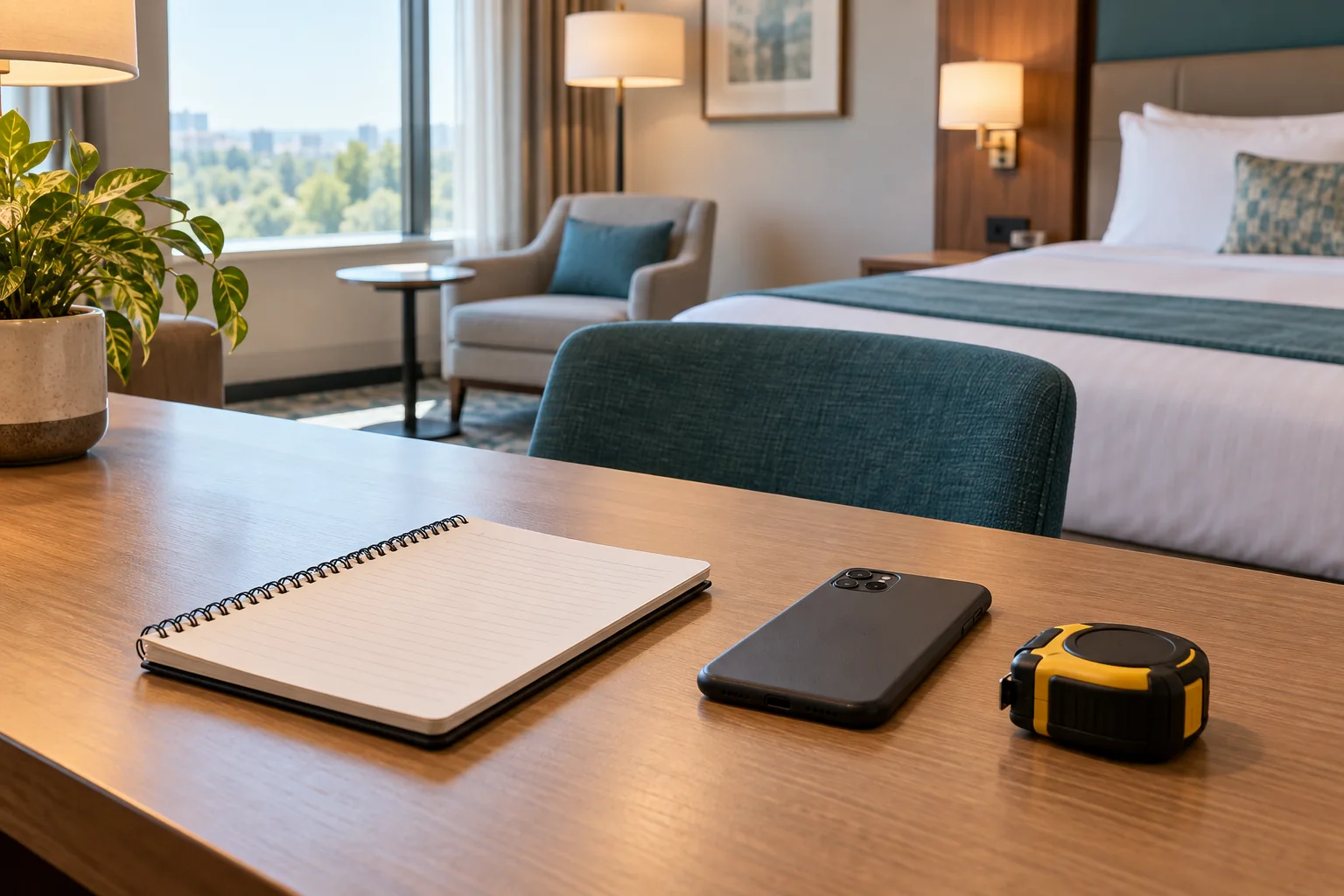
Keep that confirmation with the cancellation conditions. If the answer remains vague, ask for clarification before choosing a rate you cannot easily change. The aim is to establish suitability, not to rely on a last-minute upgrade.
For a group booking, check whether companions need to be nearby and whether that arrangement is confirmed separately. Rooms described as adjoining may simply be next to each other; ask directly about any connecting door you need. Record which features belong to each reserved room so there is no ambiguity on arrival.
Check the whole route to the room
Ask about parking or drop-off, the entrance used at your arrival time, reception, lifts, and the route to the assigned room. A step-free main entrance is not helpful if it closes before you arrive and the overnight entrance has stairs.
Consider surfaces, door operation, distances, seating, and temporary construction. Ask whether the route to breakfast or other facilities you plan to use has similar access. Confirm what happens if the lift or another essential feature becomes unavailable during your stay.
For guests who are blind or have low vision, ask about orientation, room controls, and hotel information in a usable format. The Department of Justice’s lodging guide discusses these practical access and communication issues. Explain what assistance would be helpful and how you prefer it to be offered.
Discuss the bedroom and bathroom separately
In the bedroom, ask about bed height, clear space beside the bed, under-bed clearance if relevant, and the location of outlets and controls. If you use transfer equipment, establish whether the room layout and furniture can accommodate it. Do not assume staff can safely move heavy furniture on arrival.
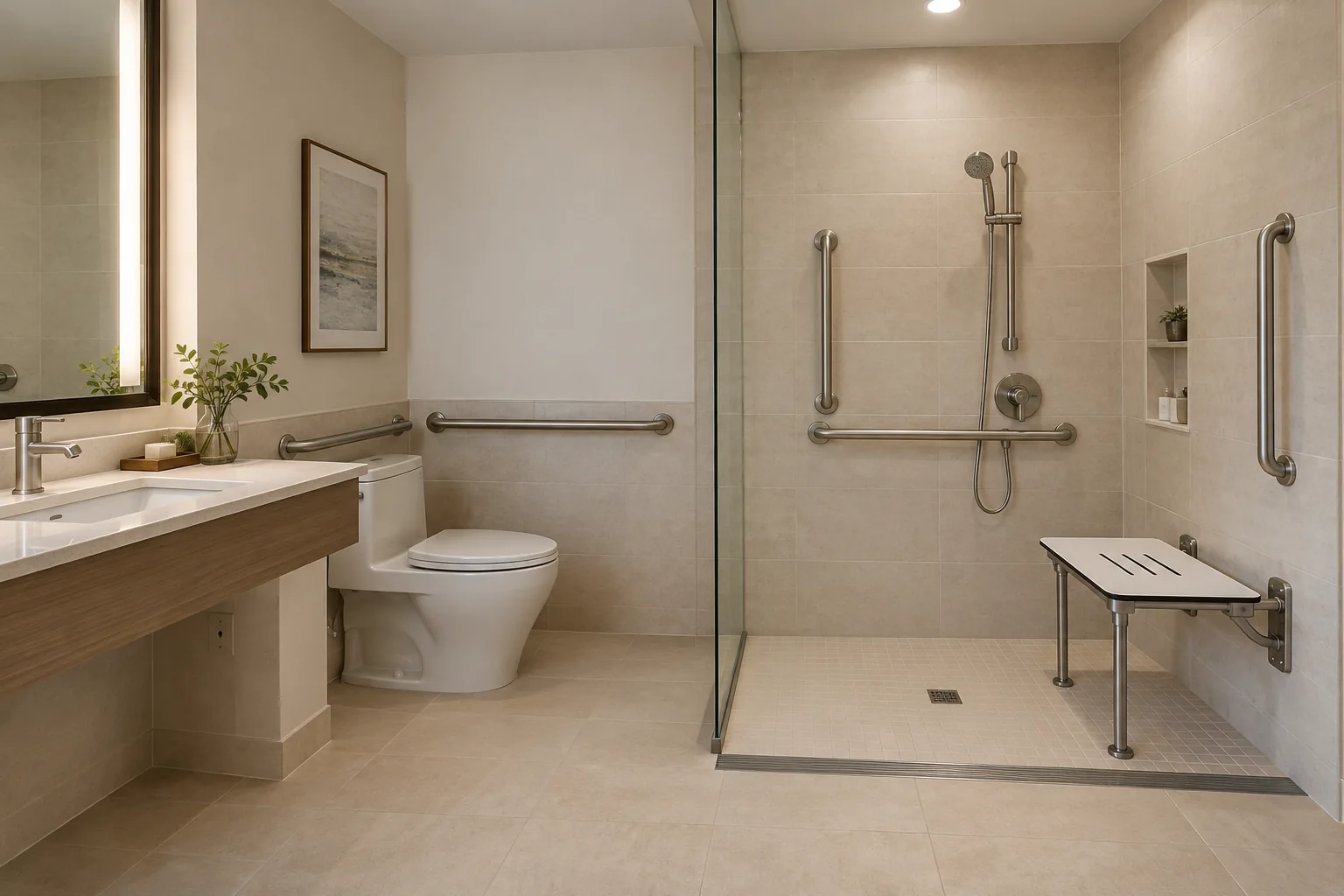
In the bathroom, ask which shower or tub arrangement is present, where grab bars and controls are located, and what seating is supplied. Confirm whether the seat is fixed or portable and whether you need more detailed specifications before deciding it is suitable.
Ask about toilet approach space, sink access, and door movement where those affect your use. Photographs can help explain a layout, but camera angles do not replace measurements. If a room feature is essential, request confirmation of that feature rather than accepting a photograph of another room.
Confirm any setup before arrival
Discuss any practical setup needed before you arrive, including space for your own equipment. Ask who will confirm it is ready and how to reach that person if plans change. Give yourself enough arrival time to check the arrangement before an evening appointment or bedtime.
Confirm communication, alerts, and assistance plans
Ask how you will receive a door knock, telephone call, alarm, or urgent instruction. The appropriate arrangement depends on your needs. For covered U.S. businesses, ADA effective communication guidance considers the nature of the communication and the person’s usual method, rather than prescribing one answer for every situation.
Discuss emergency planning before arrival and again at check-in. Ask what alert equipment is available, where the planned evacuation routes are, and what assistance the property has arranged. Do not assume an ordinary lift remains available during a fire or that an unspecified staff member will automatically arrive to assist.
The U.S. Fire Administration’s guidance for people with disabilities highlights planning around individual abilities and accessible alerts. Although that page focuses on homes, it provides useful topics to discuss with hotel staff. Our hotel fire safety guide adds arrival-specific questions.
Ask about service animals when relevant
At covered U.S. hotels, a service animal is not treated simply as a pet. The Department of Justice’s service animal FAQs explain that hotels cannot restrict guests with service animals to pet-designated rooms or charge ordinary pet fees. Other conditions and actual damage charges can apply, and ADA service animals differ from animals providing comfort alone.
Ask practical questions about outdoor relief areas and the route to them. If staff apply a pet policy to a service animal, request clarification from a manager and refer to the relevant rules for the location.
Confirm the arrangement when you arrive
Before unpacking, compare the room with the features confirmed in writing. Our room check-in checklist provides a simple order for doing this. Report a mismatch promptly and explain its practical effect using our guide to raising a concern with hotel staff.
If a suitable arrangement cannot be made, discuss alternatives and keep the correspondence. For a possible disability discrimination issue at a covered U.S. property, the ADA complaint process is available, although it does not resolve an immediate room need. Your first priority is an arrangement you can actually use.