

Checking for bed bugs at a hotel is a short observation task you can do before unpacking. The purpose is to notice something that deserves attention, keep your belongings organized, and tell hotel staff what you found. A quick look cannot certify that a room is free of pests, and you do not need to dismantle furniture or become an insect expert.
Start with a calm routine. Keep your luggage closed, look at the sleeping area, and avoid spreading clothing around the room until you have settled in. Combine this check with the door, bathroom, and exit questions in our practical hotel room check-in checklist.
Start before you unpack
Choose somewhere convenient to pause with your bags while you look around. The Environmental Protection Agency’s travel guidance recommends inspecting the mattress, headboard, and luggage rack, then using a luggage rack instead of placing luggage on the bed or floor. Keep the rack away from the bed when the room allows it.
Look at the rack before using it, including accessible joints and straps. Keep clothing inside your case until you are ready to use it. This approach also makes an ordinary room change easier because fewer belongings need to be gathered.
Do not use the hotel’s price, star rating, or polished appearance as a substitute for looking. The EPA’s bed bug myths guidance explains that dirt does not attract these insects. An attractive room may still need attention, while a worn piece of furniture does not establish an infestation.
Give each traveler a simple role. One adult might check the sleeping area while another keeps children and bags together. If lifting bedding or bending is difficult, ask staff for assistance instead of stretching or moving heavy objects yourself.
Before arrival, save your reservation details and the property’s reception number somewhere easy to reach. You may want to ask a question without leaving bags unattended. If you arrive late, keep the initial routine manageable: enough light to see the sleeping area, belongings still together, and a clear way to reach staff if something needs attention.
Look for physical signs around the bed
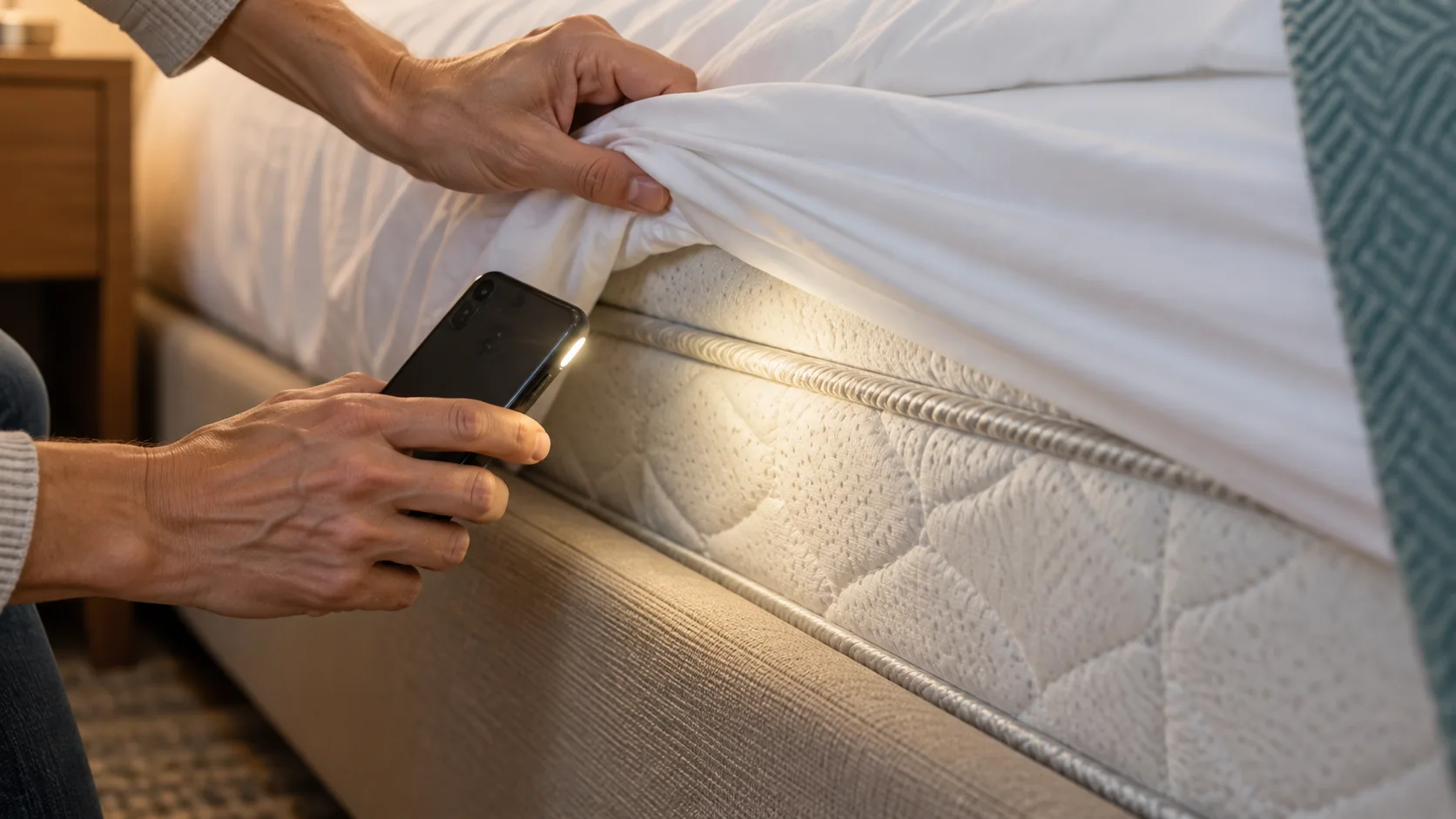
Pull back the top bedding enough to see accessible mattress edges and seams. Look at the visible headboard area and nearby bed frame without removing fittings. A phone flashlight can help illuminate a seam; it does not turn the check into a reliable inspection of every hiding place.
The EPA’s identification guidance describes several possible signs:
- Live insects near the mattress seams or other sheltered areas.
- Small dark marks on bedding or nearby surfaces.
- Rust-colored or reddish stains on sheets or the mattress.
- Shed skins, eggs, or eggshells in places where insects could hide.
These observations need context. A mark can have more than one explanation, and another insect may be mistaken for a bed bug. Describe what you can actually see rather than immediately naming its cause. A clear photograph of the location and a closer photograph can help staff understand the concern.
Keep the check limited and non-destructive
Do not remove electrical covers, detach a headboard, tear fabric, or drag furniture across the room. Those actions can create hazards and disturb possible evidence. Leave a questionable item where it is and ask the hotel to arrange an appropriate assessment. You can report a concern without having a definitive identification.
What to do when something looks suspicious
Stop unpacking and contact the front desk. Explain the room location, when you noticed the signs, and whether your bags or clothes have already been on the bed. Ask what the hotel will do next and where you should wait while the issue is assessed.
Ask for a specific next step
Useful questions include whether a manager will inspect the room, how belongings should be handled, and what alternative accommodation is available. If a room move is offered, ask how the hotel has evaluated the alternative. A different room number alone does not answer the question.
An example of a factual report
“I noticed several dark marks and a small insect along the mattress seam at about 6 p.m. My suitcase is still closed on the rack. Could someone assess the room and explain what I should do with my belongings?” This is an example, not a diagnosis. Our guide to raising a concern with hotel staff provides a broader reporting structure.
Handle belongings without spreading the concern

Avoid moving hotel bedding or loose clothing through hallways. Keep your bags closed and ask for a plan that limits spreading possible pests. Do not assume that taking everything immediately into another room solves the problem.
Do not spray the room or your luggage with an improvised treatment. The EPA warns about hazardous approaches in its bed bug control safety guidance. Hotel treatment and any assessment of belongings should be handled through appropriate professional advice, rather than a guest experimenting with chemicals.
Keep a useful record of the response
Save the time of your report, the staff member’s name or role, and the next step offered. Keep photographs private and retain booking messages, room-change details, and relevant receipts. Distinguish your own observations from what another person told you.
If you move or leave, ask for written confirmation of the arrangement and any agreed charges or adjustments. A report does not automatically establish the source of an infestation or create a particular refund entitlement. For a more detailed record, use our guide to what to record after a hotel incident.
Keep the timeline clear if the hotel later provides an inspection result. Note whether that result concerns your original room, an alternative room, or a particular item. If you receive only a verbal update, ask who assessed the concern and whether the hotel can summarize its findings in writing. Leave unknown details marked as unknown.
Handle symptoms and the return home separately
A skin reaction alone cannot establish where an exposure occurred. The CDC explains that reactions vary and may appear later. Bed bugs are not known to spread disease, but bites can cause irritation and allergic reactions. Ask a healthcare professional about concerning symptoms; seek urgent help for a severe reaction.
Before returning home, review the EPA travel advice linked above and any professional recommendations specific to your belongings. Inspect luggage and plan where to unpack. For washable items, follow fabric instructions and suitable dryer guidance; washing alone is not a dependable way to eliminate bed bugs. Avoid improvised heat treatments for luggage or electronics.
The useful habit is consistency: inspect accessible areas, keep belongings together, report observations promptly, and follow up on the response. That gives you a practical way to act without treating either an unfamiliar mark or a brief room check as proof.