

You can ask for a different hotel room when the assigned room does not meet a practical need or has a problem the hotel needs to address. The useful question is what would make the accommodation workable: a functioning lock, a usable bathroom, a confirmed accessible feature, or a sleeping space away from an unresolved disturbance.
Start by identifying the problem and its urgency. Some concerns can be discussed with reception while you wait comfortably elsewhere. An immediate hazard requires a different response. Do not stay in danger simply to complete a complaint or obtain permission for a room move.
Separate an urgent hazard from a room request
If there is smoke, a fire alarm, or another immediate threat, follow emergency instructions and seek appropriate help. The U.S. Fire Administration’s hotel guidance emphasizes knowing your exits and the evacuation plan. Reception’s room-allocation process is not a substitute for responding to an emergency.
Carbon monoxide deserves particular care because it cannot be identified by smell. The Consumer Product Safety Commission advises getting outside to fresh air immediately if you suspect CO poisoning, then calling 911. Use the local emergency number outside the United States. Moving to the next room or waiting for maintenance is not an adequate response to that concern.
For a broken lock, damaged fitting, or other issue without an active emergency, avoid using the affected item and contact staff promptly. Explain where you can wait while the hotel assesses it. If you cannot safely remain in the room, say that clearly.
Identify the feature or condition that needs to change
Describe the issue in observable terms. “The entrance door does not latch after it closes” gives staff more useful information than “the room feels wrong.” “The shower has a step that I cannot use” explains a functional problem without requiring you to discuss unnecessary personal medical details.
For a quieter room, explain the source and timing of the disturbance, when known. Ask whether another location would avoid that particular issue. A higher floor or different room category may not solve noise from nearby building work or an event elsewhere in the property.
Explain what you need from the alternative
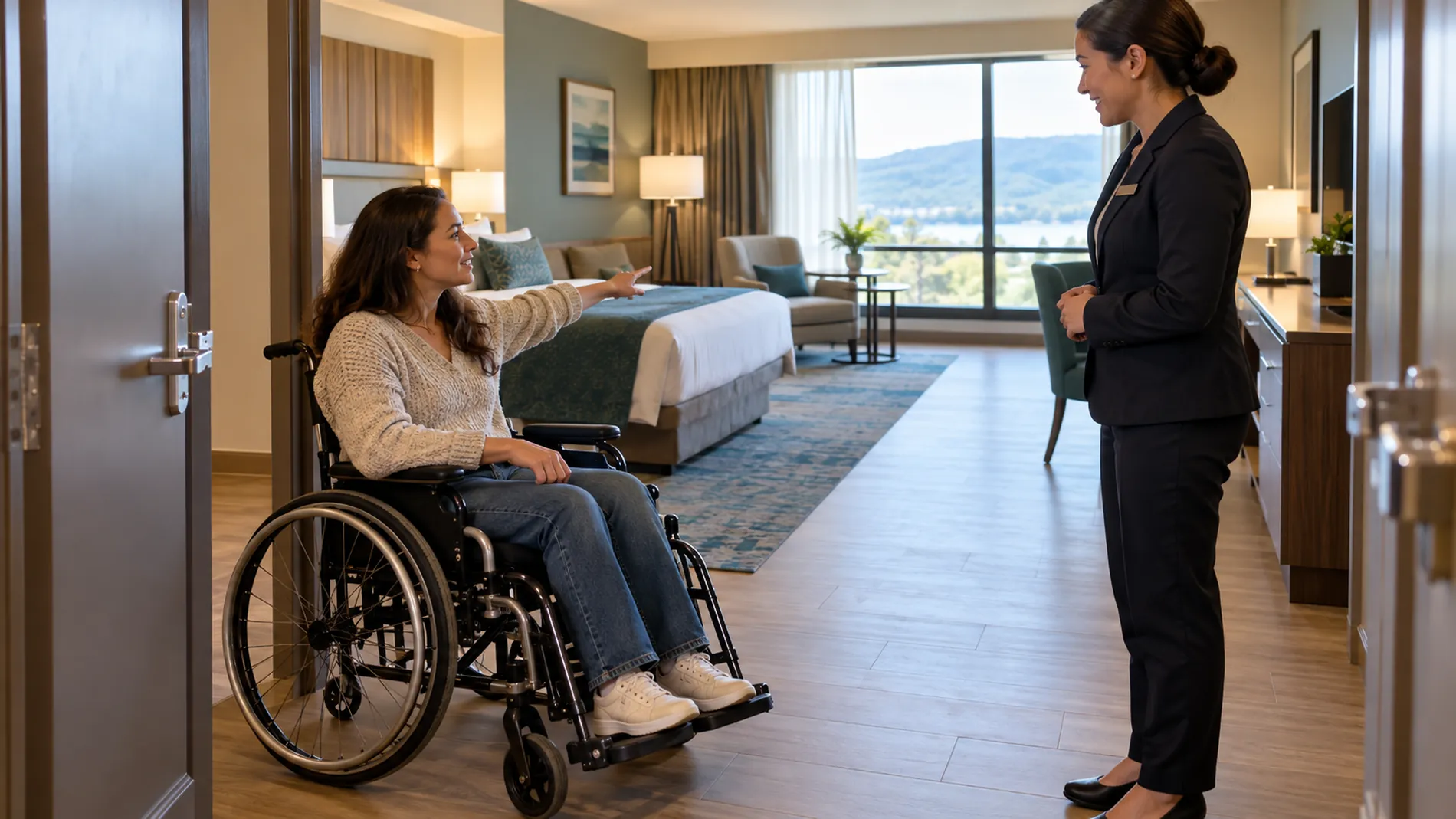
List the essential features before agreeing to move. These may include bed configuration, step-free access, a particular bathroom arrangement, proximity to a caregiver, or a suitable infant sleep product. An available room is useful only if it addresses the original concern and still works for the people staying there.
For accessibility, describe the specific feature you booked and what is missing or unusable. In the United States, the Department of Justice’s lodging guidance explains assistance for guests who are blind or have low vision, including orientation and accessible information. Ask for the assistance you need and review our accessible room questions when discussing alternatives.
Make the request clear and proportionate
State the room number privately, describe the problem, and ask for a specific next step. Let staff know if there is a time-sensitive reason, such as an unusable bathroom or a child who needs to sleep. Keep the focus on resolving the condition rather than assuming a particular employee caused it.
A practical example
“The entrance door is not latching, so I cannot secure the room. Could you arrange a room with a working lock, or tell me where I can wait while this is assessed? I still need the two beds on my reservation.” Adapt the wording to what you actually observed.
If the first staff member cannot resolve the issue, ask who can make the decision and when you should expect an update. Our guide to raising a concern with hotel staff explains how to keep that conversation focused.
Take extra care when pests may be involved
Possible bed bug signs call for a plan for the room and your belongings. The EPA’s identification guidance explains why bites alone are not a reliable indicator and describes physical evidence worth assessing. Report what you saw without presenting an uncertain identification as established fact.
Keep luggage closed, avoid carrying loose bedding into another room, and ask the hotel how the concern and your belongings will be handled. A room move should not simply transfer the same unresolved issue. Our hotel bed bug guide covers a limited arrival check and the questions to ask.
Confirm the arrangement before you move

Ask whether the alternative is ready and whether you can check the relevant feature before transferring everything. Confirm the room type, remaining stay dates, any agreed charges, and whether the original concern has been recorded. If someone offers a price adjustment, request written confirmation.
For an ordinary maintenance issue, the hotel may propose a repair instead. Ask when it will happen and whether the room can be used while work is underway. Decide whether that plan meets your needs; do not rely on an undefined promise that someone will attend “soon.”
When moving, count essential belongings, empty the safe, collect chargers, and check the bathroom and drawers. Update any travel companions who need to find you, without broadcasting the new room number publicly. Inspect the replacement using the same check-in checklist.
Ask how the original keys will be handled and whether you need to collect new keys for every registered guest. If you requested assistance or a delivery to the first room, update that arrangement as well. A clear handover prevents an otherwise successful move from becoming a series of avoidable return trips.
If the hotel cannot offer a workable room
Ask what other options it can provide and whether the booking provider needs to be involved. A full hotel, a particular booking arrangement, and local rules can affect the available response. A requested move does not automatically create a right to an upgrade, cancellation, reimbursement, or a refund.
The FTC’s business-resolution guidance recommends gathering relevant documents and clearly stating the resolution you seek. Keep your confirmation, messages, photographs where appropriate, and a short record of what staff offered. Check applicable terms and obtain local advice if the dispute requires it.
If you decide to leave, tell the property and booking provider through their established channels, request a written account of the arrangement, and retain necessary receipts. Describe the reason accurately. Clear records help explain your decisions later, while the immediate objective remains accommodation that you can actually use.
Before making a further booking, confirm the essential feature with the replacement property and check its price and cancellation terms. When circumstances allow, avoid committing to additional costs on the assumption that someone else has agreed to pay them. Keep an explicit agreement separate from an expectation you have not yet discussed.