

Keeping track of valuables during a hotel stay is easier when every important item has a deliberate place. Phones, passports, payment cards, jewelry, and work devices often move between pockets, bags, desks, and bedside tables. The problem is not always theft; rushing out for breakfast or changing rooms can also separate you from something essential.
A small inventory and a repeatable departure routine help you notice what is missing sooner. They also give you better information if you need to ask the hotel, a card issuer, or an insurer for assistance. Start this routine while completing your hotel room check-in checklist.
Decide what needs to travel with you
Before packing, separate essential belongings from items you could reasonably leave at home. Think about replacement difficulty as well as price. A familiar charging cable may be easy to replace; a work device, specialist equipment, or necessary identity document may disrupt the trip much more.
Keep a private list of important items, including distinguishing details and serial numbers where useful. Photographs can document condition and help identify an item, but do not collect more sensitive information than you need. Store records securely rather than in an openly shared travel album.
A useful inventory can be short: “black work laptop, identifying sticker, serial number saved securely” gives you more to work with than “computer.” Avoid copying card security codes or account passwords into the same list. The aim is to identify belongings and reach the right provider without creating a new collection of exposed credentials.
Check relevant insurance before departure. The National Association of Insurance Commissioners recommends confirming what existing insurance covers while traveling. Ask about limits, exclusions, documentation, and whether particular expensive items need additional coverage. A policy name alone does not establish that a loss will be covered.
Choose backup payment and communication arrangements that do not depend on one wallet or phone. Keep the information needed to contact providers somewhere you can access if that device disappears.
Set up a consistent storage routine
On arrival, choose where each item belongs when it is not being used. Avoid treating several surfaces as temporary storage. A watch left beside the bathroom sink is easy to overlook when your usual departure check focuses on the desk.
Understand the available safe or storage service
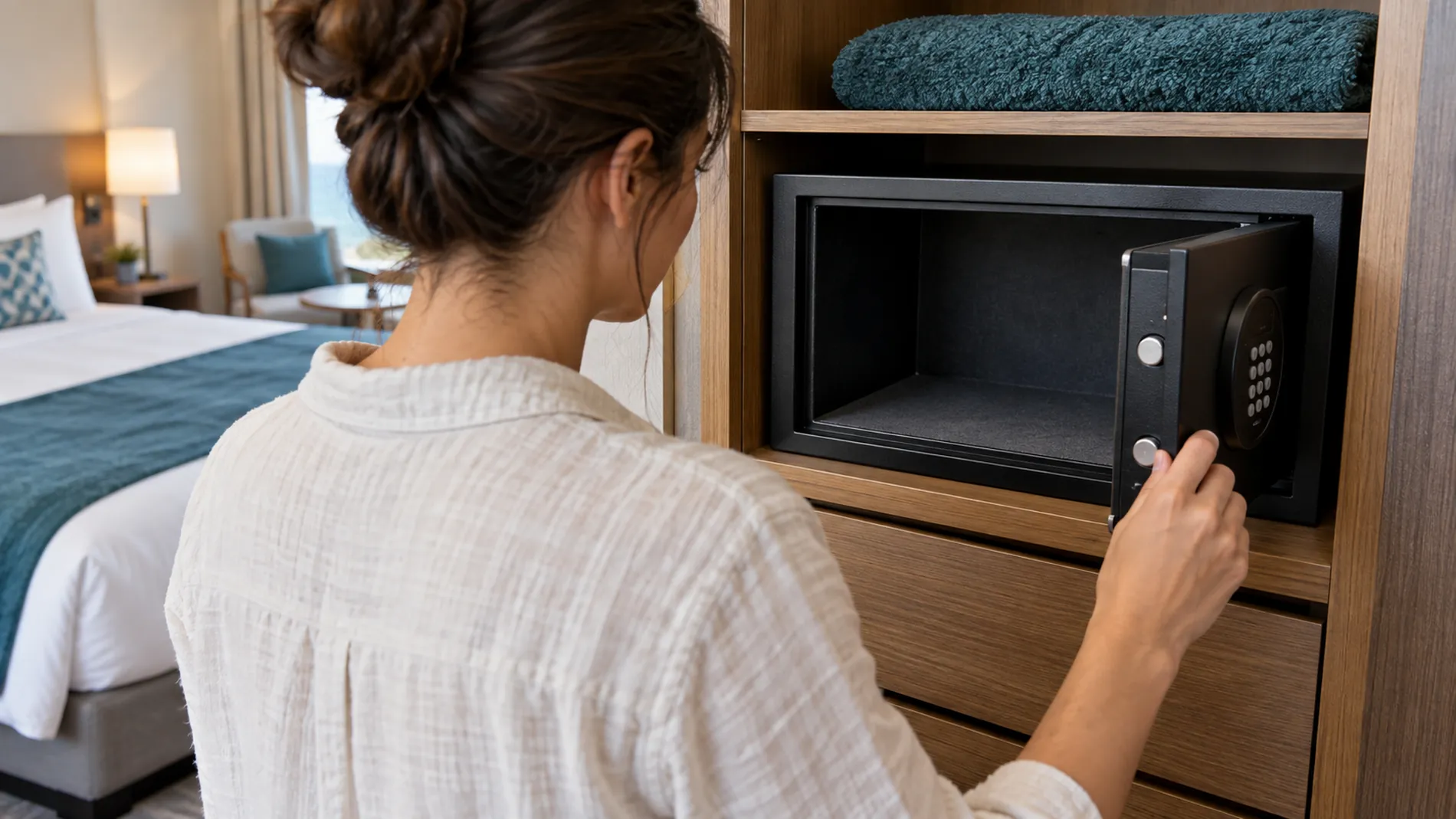
If the room has a safe, read its instructions and confirm that it opens and closes properly before putting anything inside. Keep its code private and avoid leaving the door open with contents visible. A safe is a storage option, not a guarantee against loss.
Ask the hotel about alternatives for items that do not fit or need different arrangements. If staff accept property for storage, clarify how it will be identified, who can collect it, and what receipt or record you receive. Ask about any stated limits before assuming that accepting an item means accepting unlimited responsibility.
Check access as well as security
Consider when you will need the item again. A document stored through reception may be inconvenient if your departure is before that service opens. Check local identification requirements before deciding whether to carry or store a passport. Different destinations and circumstances call for different choices.
If two people share a room, agree who is responsible for shared documents and equipment. Choose a routine both understand without sharing unnecessary account passwords. For example, one person can check the shared camera while each traveler checks their own wallet and phone. Reconfirm the arrangement when plans change or someone leaves earlier.
Protect the information inside your devices
A phone’s value includes the accounts, messages, and records it can open. Follow the FTC’s phone-protection guidance by using a screen lock, keeping software current, and backing up important information. Prepare recovery arrangements before you need them.
The Federal Communications Commission recommends recording device identification information and considering remote protection features. Learn how your particular device’s location, lock, and erase options work. An unfamiliar recovery screen is harder to navigate while you are already worried about a loss.
Keep work equipment subject to your employer’s rules. If a device goes missing, the organization may need to secure accounts promptly. Avoid leaving devices unattended in lounges or on tables while asking staff a question. Our guide to hotel Wi-Fi and account security covers the online part of the same routine.
Use a short check whenever you leave
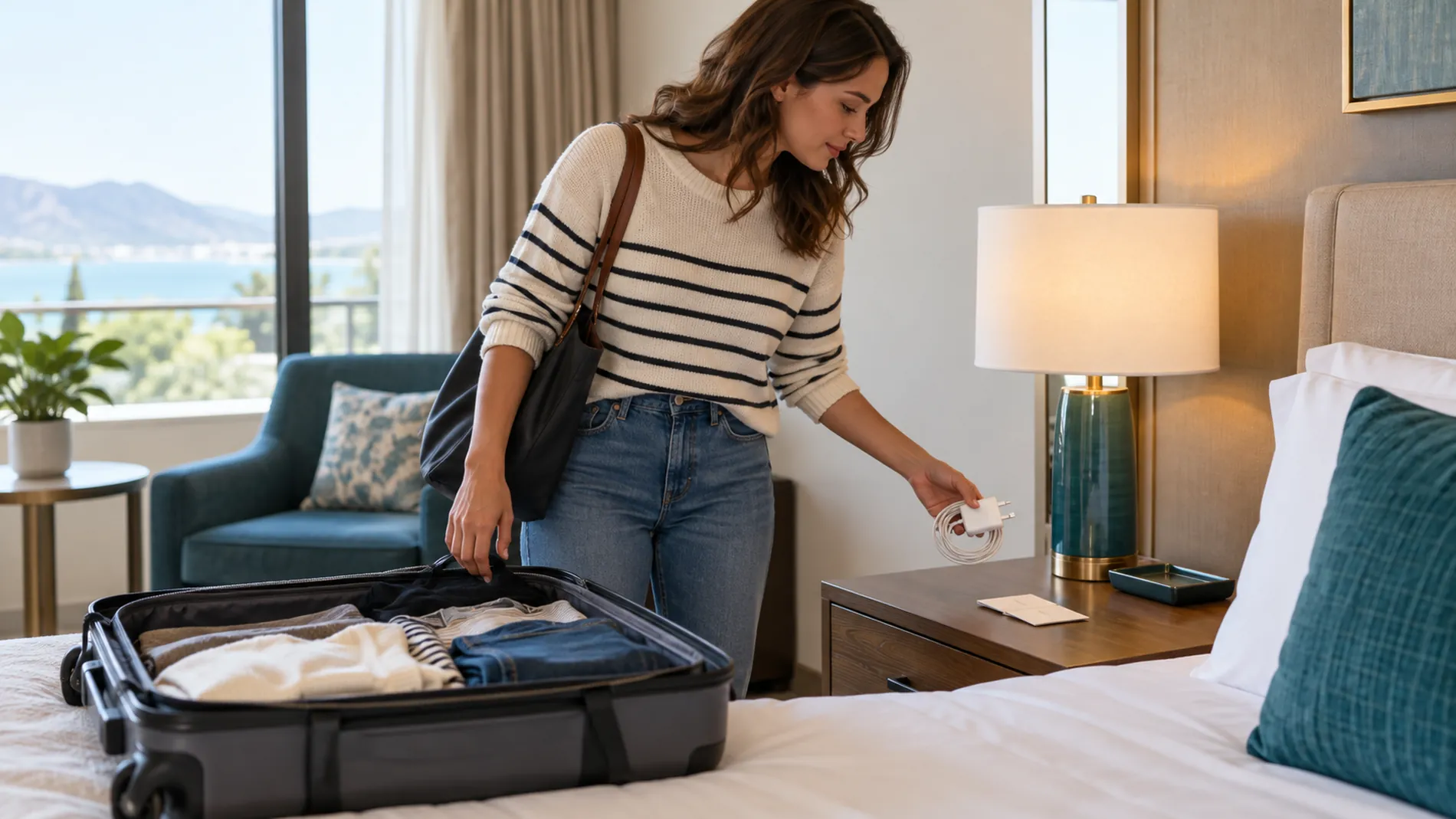
Create a check you can repeat without emptying every bag:
- Identify which keys, phone, payment method, and documents you need now.
- Put remaining valuables in their chosen storage place.
- Check the bedside area, bathroom, desk, and charging points.
- Confirm that the room door closes and secures properly.
For a room change, treat the move like a small checkout. Empty the safe, collect chargers, check drawers, and count essential items before handing back the original key. When traveling with others, assign responsibility for shared equipment rather than assuming another person packed it.
At final checkout, allow enough time to complete the same routine. Check the room before loading everything into transport, when returning for a forgotten item may be much harder.
If something is missing, act on the item involved
First make a focused check of your usual storage places and recent movements. Then contact the hotel’s lost-property or management team with a factual description. Record when and where you last remember having the item, who you spoke with, and any reference number. Avoid accusing a particular person without evidence.
For missing payment cards, contact the issuer promptly using its verified number or app. The FTC’s lost-card guidance explains that U.S. protections vary by card type and reporting timing. Do not wait for the hotel to finish searching before protecting the account.
For a lost U.S. passport abroad, follow the State Department’s reporting and replacement instructions. Other travelers should consult their own issuing authority. A photocopy may help explain the situation, but it is not automatically a replacement travel document.
If the hotel later finds an item, verify the collection or shipping arrangement through the property’s known contact details. Confirm the item description, delivery address, charges, and tracking process before agreeing. Keep that correspondence with your original report so that the handover is documented rather than relying on an unexplained payment request.
If theft is suspected, ask the appropriate local authority about reporting. Do not use a device-location result as a reason to confront someone. Keep original receipts, communications, and photographs together, following our guide to recording a hotel incident. A clear record supports follow-up while the practical priority remains protecting access to money, identity documents, and accounts.