

Learning how to research a hotel before you book is less about finding a flawless property and more about answering the questions that matter for your trip. A polished photograph cannot confirm a working entrance, a suitable bathroom, or a clear cancellation policy. A review cannot guarantee what your own stay will be like.
Use a short, repeatable process: identify your needs, verify the property and seller, compare recent information, and save the terms you accept. These steps help turn an attractive listing into a booking you understand.
Start with what this particular stay requires
Write down three essentials before comparing prices. You might need a staffed reception after midnight, a genuinely step-free route, or enough separate beds for your family. Add your dates, arrival time, transport plan, and maximum total budget. This prevents an appealing discount from distracting you from something the trip depends on.
Separate essentials from preferences
A quiet room may be a preference; space for a mobility device may be essential. Ask which features belong to a specific room category and which are only requests. “Subject to availability” should prompt a follow-up when you cannot manage without the feature.
Our before-booking questions can help organize those priorities. Save the answers alongside the reservation, especially when they affect whether you can use the room.
Verify the property and the business taking payment
Check the exact property name, street address, and location against more than one source. Similar names can refer to different branches, and a city label does not tell you how far the hotel is from your destination. Look at the actual entrance and your likely arrival route.
Identify whether you are booking directly or through an intermediary. Both can be legitimate, but the company charging your card may handle changes differently from the hotel. The FTC’s travel scam guidance recommends checking the business and offer before paying. If something seems inconsistent, find the hotel’s contact details independently and verify the offer.
Do not let a countdown replace that check. Our guide to hotel booking scam warning signs explains what to examine when payment instructions or messages feel unusual.
Read reviews as evidence to investigate

Read recent reviews across several sources, including moderate ratings. Look for specific descriptions that matter to you: late arrival problems, noise from a nearby venue, an unreliable lift, or a mismatch between the booked and assigned room. A pattern is more useful than a single enthusiastic or angry comment.
Look at dates, detail, and repeated issues
The FTC explains how to evaluate online reviews, including suspicious bursts of reviews and the limits of spotting fakes by appearance. Reviews are a starting point for questions, not proof that a property is safe or unsafe.
Turn an observation into a useful question
If several guests mention building work, ask which areas are affected during your dates and when noisy work happens. A concrete answer helps more than asking whether the hotel is “nice.” Keep the response if the issue could change your decision.
Notice whether reviews refer to the same room category or building you are considering. A property with several wings may offer very different layouts. Also check whether a reported issue predates a refurbishment. You are trying to understand current conditions, not to average together every experience the hotel has ever received.
Ask about room features and arrival arrangements
Confirm how you enter after reception closes, where you can unload luggage, and whether the route to your room involves stairs. Check practical details such as lift access, bathroom layout, connecting-room arrangements, and whether a requested crib must be reserved separately. Ask for current information rather than relying on an undated photograph.
Plan the last part of the journey as carefully as the destination. Check where a taxi can stop, whether parking is on site, and how you would reach the entrance with luggage. An easy daytime walk may feel impractical after a late arrival or with a tired child. Ask about the actual route rather than relying on a neighborhood label.
For accessibility, request measurements and descriptions relevant to your needs. U.S. ADA rules for covered lodging reservations include requirements to describe accessible features sufficiently for guests to assess suitability; coverage and exceptions matter. Our accessible hotel room questions offer a more detailed planning framework.
Include fire protection in your questions
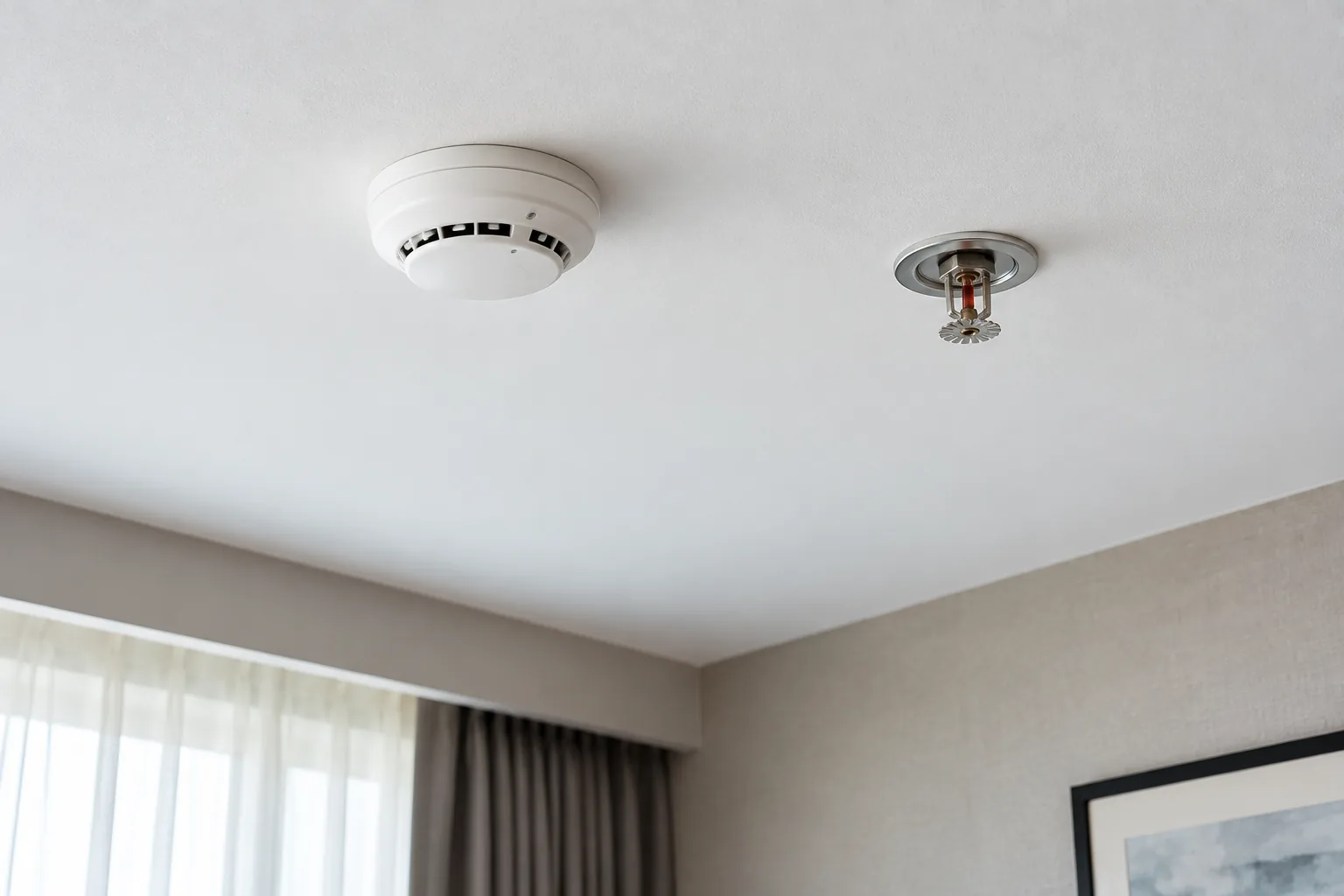
Fire preparation also starts before arrival. The U.S. Fire Administration’s hotel guidance recommends choosing a property with hardwired smoke alarms and sprinklers. Ask directly about these features. Their presence does not establish the condition of every other part of the hotel.
Compare the payable total and cancellation terms
Compare the same dates, occupancy, room type, and meal arrangements. Include parking, selected extras, and any deposit or payment hold in your planning. Ask when money will be collected and how a hold differs from a final charge. Currency conversion can also change what appears on your statement.
For covered U.S. short-term lodging offers, the FTC’s fee rule requires advertised totals to include known, calculable mandatory charges. Government charges and optional extras can be excluded initially, but must be disclosed before payment is requested. Compare the final amount you are authorizing, not only the first price displayed.
Read the cancellation deadline, its time zone, no-show terms, and rules for shortening the stay. Check whether changes are handled by the hotel or booking company. A flexible-looking label is less useful than the actual deadline and charge written into your rate conditions.
Think through one realistic change: a delayed flight, a shorter stay, or another traveler joining you. Find the relevant term now. If an answer is provided verbally, ask for written confirmation through the established booking channel. Keep that response with the rate conditions rather than assuming a general customer-service assurance overrides the contract.
Keep one clear booking record
Save the confirmation number, property address, room description, dates, guest count, payment receipt, and cancellation terms. Include written answers about essential features. Keep an offline copy so a poor connection on arrival does not leave you searching your inbox outside the building.
If an essential answer remains unclear, resolve it before selecting a nonrefundable rate. Compare another property if needed; uncertainty about a requirement has a cost even when the headline price is lower.
Once booked, review our hotel room check-in checklist. Research helps you choose, while a brief arrival check confirms what is actually available on the day. Keep those two steps connected and give yourself time to raise a mismatch before unpacking.