

After a hotel incident, a short, accurate record can help you explain what happened and follow up with the right organization. The record might concern damaged property, a fall, an unexpected charge, missing belongings, or a problem that required a room move. Its purpose is to preserve facts while they are still reasonably clear.
You do not need to establish fault before making notes. Record what you observed, identify anything uncertain, and keep supporting documents together. A useful account separates the event itself from the actions taken afterward and the outcome you are asking someone to consider.
Get help before collecting information
If someone needs urgent help or the area is unsafe, deal with that first. In the United States, 911.gov advises calling 911 for emergencies requiring immediate police, fire, or ambulance assistance. Elsewhere, use the local emergency number. Give the property address and location within the building, then follow the call-taker’s instructions.
Do not delay evacuation, medical care, or necessary assistance to take photographs. Avoid entering a hazardous area, recreating an accident, or handling something dangerous to improve your record. If you cannot document a condition safely, note that limitation later.
Notify hotel staff when appropriate so they can respond to the situation. For an ordinary service concern, our guide to raising a concern with hotel staff explains how to report the issue and request a clear next step.
Write down the basic facts while they are fresh
Start with a simple timeline. Include the date, approximate time, property name, and precise location. If traveling across time zones, state the local time used. Mark estimates as estimates instead of replacing a missing detail with an exact-looking answer.
You can begin with a brief note on your phone and organize it later. If your device is unavailable, use paper and save a private copy when convenient. The format matters less than making the account readable and distinguishing recorded details from assumptions.
Describe what you personally saw or experienced. For example, “I saw water on the bathroom floor beside the shower” describes an observation. “The hotel knew about a leak” adds a conclusion that would require separate evidence. Keep another person’s explanation clearly attributed to that person.
Keep the account specific and easy to follow
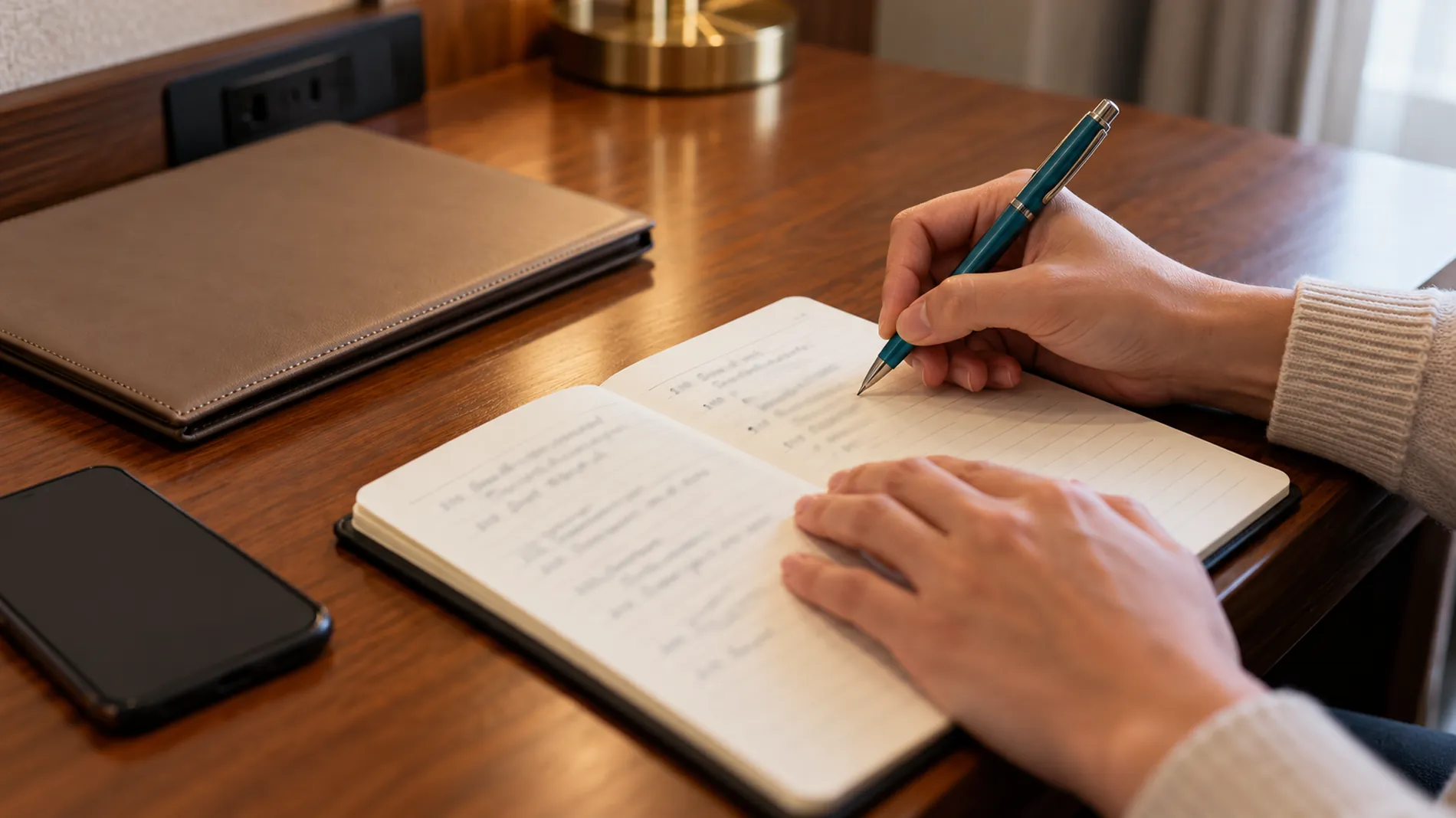
A first note can use a few practical fields:
- What happened, including the sequence you remember.
- Where it happened and what conditions you observed.
- Who was present, if known and relevant.
- When you reported it and who received the report.
- What assistance, explanation, or next step was offered.
- Which details remain unknown or need checking.
Use our room concern notes as a starting structure. Keep the account concise enough that someone unfamiliar with the stay can understand it. Additional details can be added as dated updates without rewriting the original memory as though you knew everything immediately.
Record conversations without inventing quotations
Note a staff member’s name or role and the substance of the conversation. If you do not remember the precise wording, label it as a summary. Ask whether there is an incident or service reference number and how you can obtain confirmation of the report.
An example of a clear note
“At approximately 8:20 p.m., I reported that the room door would not latch. The evening receptionist said maintenance would assess it. At 8:45 p.m., reception offered another room.” This example records a sequence without claiming why the lock failed or what anyone knew beforehand.
Written notes are often enough for a useful record. If you want to record a conversation, ask for permission and check the applicable rules first. Do not covertly record people as a substitute for a factual written account.
Preserve relevant photographs and documents
When safe and appropriate, take a wider photograph showing the location and a closer image showing the condition. Keep original files and make separate copies for cropping or annotation. Avoid including unrelated guests, children, passports, payment details, or room numbers in anything you later share publicly.
Save the booking confirmation, relevant listing details, messages, receipts, and any written hotel response. Keep filenames understandable and store the material somewhere private. If another person witnessed the event, ask whether they are willing to provide their own account or contact details; do not pressure them or publish those details.
If relevant hotel-held records may exist, ask management promptly whether they can preserve them. Note the request and response. Making a request does not establish that records exist or that the hotel must release them directly to you.
Track the response and any practical costs
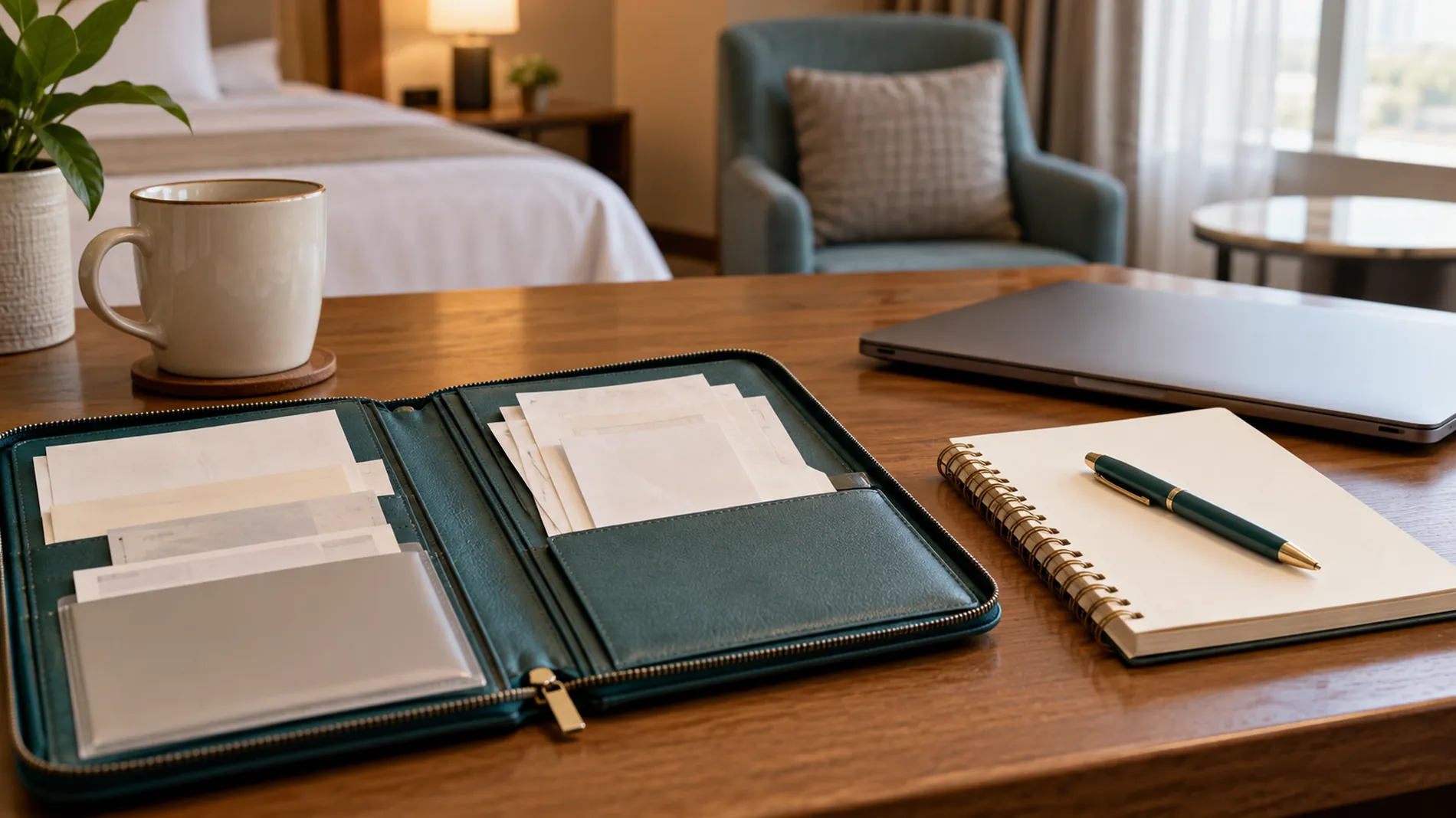
Record what changed after the report: an inspection, repair, room move, replacement item, or agreed adjustment. Keep each offer distinct from the final outcome. For a move, note both rooms privately and whether the arrangement addressed the original concern. Our room-change guide explains what to confirm.
Retain itemized receipts for relevant expenses and briefly explain why each arose. Keep medical information from treating professionals separate from your own observations. A receipt documents spending; it does not by itself establish responsibility or guarantee reimbursement.
The FTC’s guidance on resolving business problems recommends organized supporting documents and a clear requested resolution. Send a focused summary with relevant copies, and retain the originals and a record of submission.
Match any further report to the actual issue
Different organizations handle different problems. For a disputed card charge, consult the issuer and the FTC’s credit and debit card dispute guidance. Describe the transaction accurately; dissatisfaction with a stay is not the same as an unauthorized payment. U.S. procedures and protections vary, and applicable deadlines can matter.
If the incident involves an unsafe consumer product, such as furniture or an appliance, SaferProducts.gov accepts reports for the U.S. Consumer Product Safety Commission. That channel addresses product safety, rather than general hotel-service complaints. Preserve an accessible model or identifying detail if you can do so safely.
If personal information has been misused, IdentityTheft.gov provides U.S. identity-theft reporting and recovery support. For missing cards, devices, or documents, also follow the practical steps in our hotel valuables guide. A hotel report does not replace protecting the affected account.
Before each follow-up, identify what remains unresolved and what response you need. Keep the next message factual, attach only relevant material, and update your timeline when an answer arrives. Good documentation makes the situation easier to assess without promising a particular legal, insurance, or refund outcome.
Keep one current folder for the matter so messages do not become scattered across devices and apps. If you correct an earlier detail, explain the correction rather than silently replacing it. That gives the person reviewing your account a clearer picture of how the information developed.