
Learning how to choose a hotel with safety in mind starts before you pack. Alongside price and location, consider who handles your reservation, what recent guests report, and how the property responds to practical questions. An attractive room is only one part of the decision.
Use this guide to compare hotels without relying on marketing promises. The goal is not to find a risk-free property, but to make a more informed choice and prepare for your arrival.
Verify the Hotel and Booking Website
Booking scams make this especially relevant in 2026. In a June 2026 travel scam alert, the Federal Trade Commission warned that scammers place misleading advertisements and imitate hotel websites. A familiar logo or prominent search result is not enough to establish who you are paying.
Confirm the Property and the Seller
Find the hotel’s official website independently. Compare its address and contact details with the booking listing. For chain hotels, start with the brand’s official property directory. For independent properties, cross-check the business across several sources rather than trusting one advertisement.
Before paying, identify whether you are booking with the hotel or a separate travel company. Third-party booking is not automatically fraudulent, but you should understand who will handle changes, cancellations, and problems. Save the seller’s name, reservation terms, and confirmation.
When anything is unclear, call the property using independently verified contact information. Ask whether the room type and arrival arrangements match the offer you are considering.
Read Reviews for Specific Safety Concerns
The FTC’s guidance on evaluating reviews recommends comparing sources and considering review dates and reviewer histories. It also cautions that you cannot reliably identify every fake review just by reading it.
Look for Patterns, Not Just Stars
Read recent comments about door locks, staff availability, parking, maintenance, and how complaints were handled. Give particular attention to repeated, specific concerns rather than one vague criticism or glowing endorsement.
A sudden cluster of enthusiastic reviews is a reason to investigate further, not proof of fraud. Compare guest photos with property images and ask management about unresolved issues. For your shortlist, write down what you can verify, what remains uncertain, and which answers you need before booking.
Treat your notes as a comparison tool: one column for confirmed features, another for unanswered questions. Resolve important uncertainties before committing to a reservation.

Research the Location and Arrival Process
Look beyond the hotel’s distance from your main destination. Map the entrance, transportation stops, parking arrangements, and the route you expect to use with luggage. Review available street-level images, remembering that they may not show current conditions.
The U.S. Department of State’s lodging guidance encourages researching the area and considering access to transportation, services, and staffed facilities. Although written for international travelers, these are useful questions for a domestic hotel search too.
Ask what happens if you arrive after midnight. Will someone be at reception? Where should your driver stop? How do you enter after hours? Choose arrangements you understand and can manage comfortably.
For example, compare a cheaper property requiring an unfamiliar late-night transfer with one offering an arrival process you have confirmed. Evaluate the whole journey, not simply the room rate. Keep an alternative accommodation option in your travel notes.
Ask About Security and Emergency Features
Use specific questions instead of asking whether the hotel is safe. Ask about front desk hours, guest access to accommodation floors, door-lock maintenance, and the process for contacting staff overnight. Request clear answers rather than accepting a general reassurance.
Give each shortlisted property the same questions. For example, ask who responds if your room key stops working late at night and how maintenance concerns are escalated. A useful answer explains the process and who to contact. Record that answer alongside the rate so that convenience, support, and cost all inform your decision.
Check Fire Safety and Accessibility
The U.S. Fire Administration recommends hotels with hard-wired smoke alarms and automatic sprinklers in guest rooms. Ask the property about these features before committing.
You can also consult the Hotel-Motel National Master List. Its criteria include hard-wired guest-room smoke alarms and guest-room sprinklers in buildings four or more stories tall. Treat it as a fire-safety resource, not a comprehensive rating of security, accessibility, or service.
Confirm Your Individual Accessibility Needs
Explain the features you need, such as step-free access, elevator availability, or a particular bathroom layout. Ask the hotel to confirm the relevant room details before booking. Discuss emergency arrangements that account for your needs, rather than assuming a general accessibility label answers every question.
Review Payments, Privacy, and Cancellation Terms
Read the total price, deposit requirements, cancellation deadline, and refund conditions. The FTC’s travel scam prevention advice recommends getting the terms before paying and avoiding pressure to decide immediately. Demands to pay only through gift cards, cryptocurrency, or wire transfers are serious warning signs.
Verify Unexpected Payment Messages
A message containing your correct travel dates is not necessarily genuine. Bitdefender’s June 2026 hotel scam research documented WhatsApp messages using real reservation information to request payment-card verification.
Do not enter card information through an unexpected message link. Contact the hotel through independently verified details, or contact the booking platform through its official app or website. Ask customer support to verify the request rather than relying on the message itself.
Keep confirmation numbers and payment records private. For digital check-in, ask which information is required and which official channel you should use to provide it.
Before choosing a nonrefundable rate, ask yourself what would make you change hotels. An unconfirmed accessibility feature, unclear after-hours entry, or an unresolved maintenance question may justify keeping your options open. Compare flexible and restricted rates against your actual plans, and save the cancellation deadline with its stated time zone. This is a planning decision, not a promise that one rate eliminates risk.
Check Your Room Before You Settle In
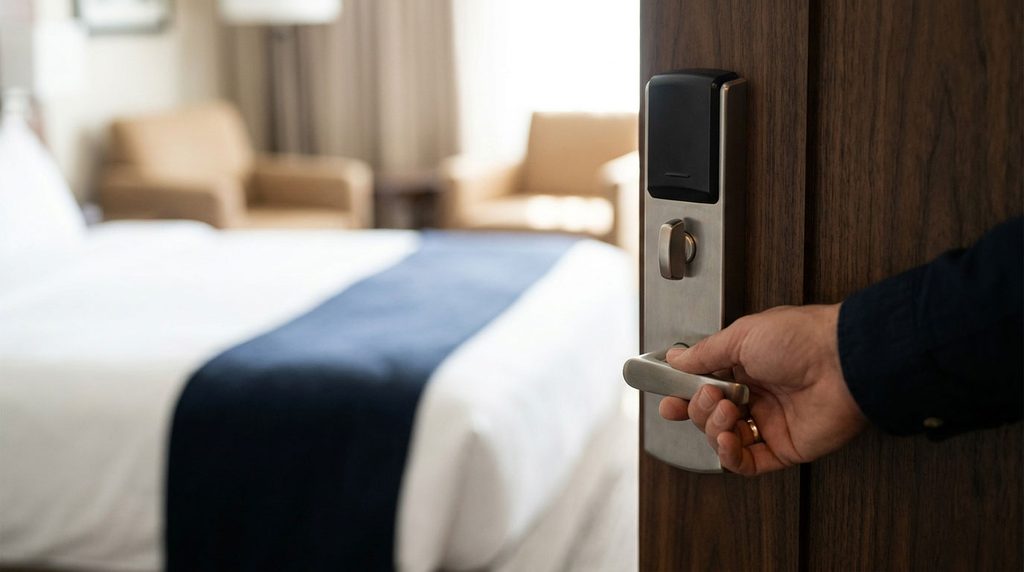
Once you arrive, compare the room with what you booked. Check that the entrance door closes and locks, windows secure properly, and curtains provide privacy. Confirm how to contact reception and report any problems promptly.
Following the U.S. Fire Administration’s guidance, read the evacuation plan, identify the two closest exits, and count the doors between your room and those exits. Ask staff about anything unclear before unpacking fully.
If an essential feature is missing or a security problem remains unresolved, request another room or consider your backup accommodation. Keep a record of the concern and the hotel’s response.
Knowing how to choose a hotel means combining careful research with practical checks. Explore Safe Hotel Stay and our hotel safety articles to make informed preparation part of your travel routine.